Rooftop tent season: how to read the spec sheets before you buy
Six tents sold in South Africa publish their weights, sizes and load ratings in different ways. Here's how to line them up fairly, and what to check on your roof before any tent goes up there.
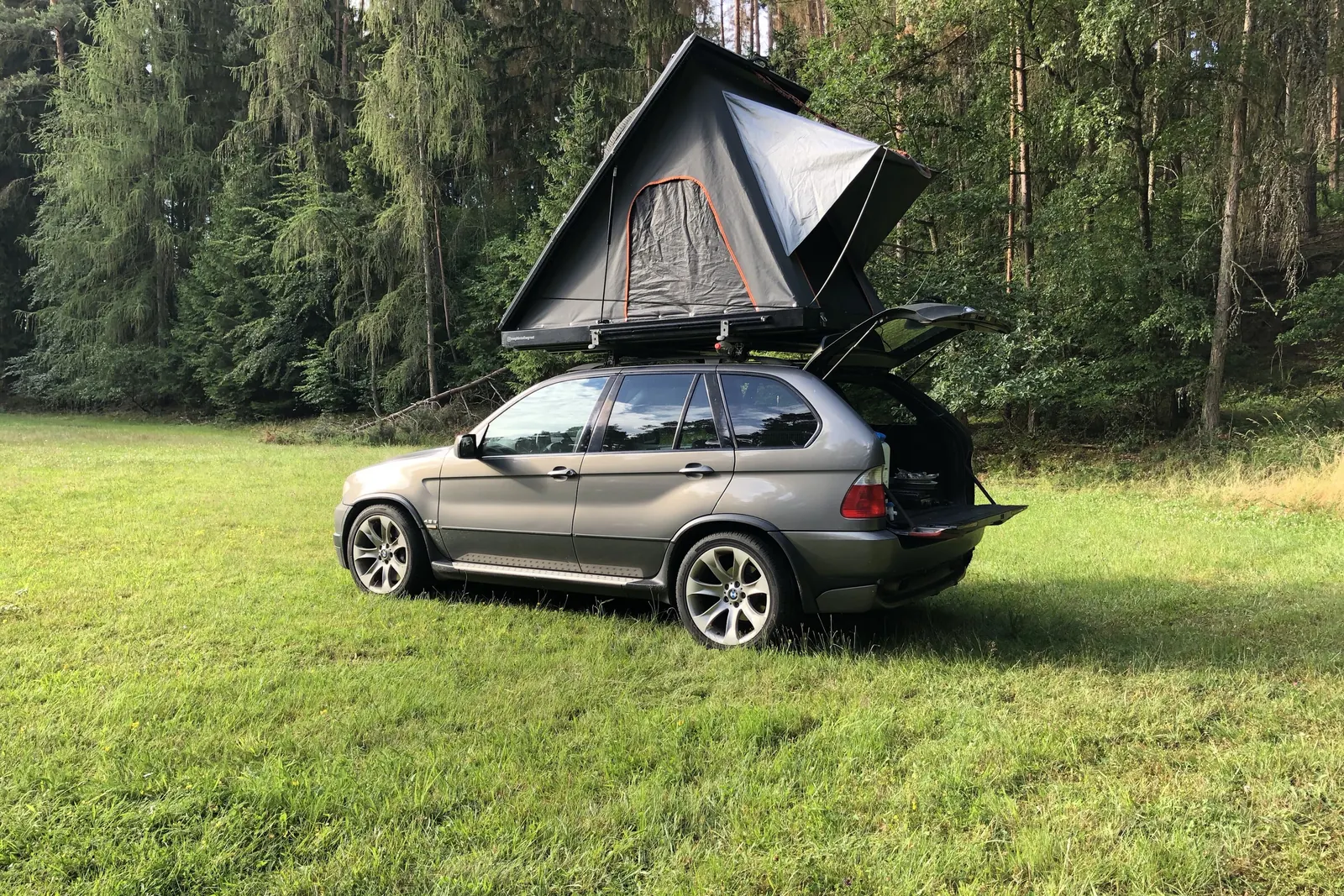
With the December holidays about two months off, a lot of people are deciding on a rooftop tent now. Our rooftop tent comparison puts six tents sold in South Africa side by side, using only what each maker publishes. The figures are only useful once you know how differently the makers measure them.
The weight figure is never quite the same thing
Weight is the number that decides whether a tent can go on your vehicle at all, and no two makers count it the same way. Alu-Cab lists its Gen 3-R hard shell at about 76 kg for the tent alone, without the 3 kg mattress or the ladder. Eezi-Awn's Stealth is 90 kg with the ladder packed. BunduTec gives the BunduTop as 73 kg for the tent, with the ladder adding 7 kg. Front Runner's Feather-Lite II is 49 kg including ladder and cover. Howling Moon lists the 1.4 m Stargazer Deluxe at 56 kg, and its page doesn't say whether that includes the ladder.
So before you compare, add the missing parts back in. Then add the mounting brackets and the rack or load bars underneath, because all of it sits on the roof.
"Load rating" can mean three different things
Tent pages use the phrase loosely. Alu-Cab's 50 kg on the Gen 3-R is what you may carry on top of the closed tent, on its cargo rails. Front Runner's 270 kg on the Feather-Lite II is a rating for the tent itself. Howling Moon's 140 kg and Front Runner's 300 kg are ladder ratings. BunduTec says the BunduTop's roof is designed to carry solar panels only.
None of these figures tells you what your vehicle's roof can carry. That number comes from your vehicle's owner's manual and from the rack maker, and the lower of the two applies.
Driving load versus parked load
Most vehicle manuals quote a dynamic roof load, the weight allowed while driving. The static load, when the vehicle is parked and people are sleeping up top, can be higher but isn't always published. Alu-Cab's RT-4S page shows how far apart these can be: it gives separate ratings of 200 kg closed and static, 50 kg closed and driving, and 30 kg open and static. If your manual gives only one roof figure, treat it as the driving limit and ask the dealer about static loads.
Sizes, mattresses and closed height
Most of the tents in the comparison are about 1.3 to 1.4 m wide inside. Wider versions exist (Eezi-Awn and Howling Moon both list 1.6 m and 1.8 m sizes, and BunduTec offers King and Super King), but they weigh more. Mattress thickness runs from 60 mm on the Feather-Lite II to 100 mm on the BunduTop.
Closed height affects wind noise and whether you fit under a carport or into a parking garage. Front Runner and Eezi-Awn each list 320 mm for their tents, Howling Moon gives a 360 mm packaged height, and Alu-Cab lists 210 mm at the front and 280 mm at the rear. Add the height of your rack to whichever figure applies.
Fabric weight is not waterproofing
A gsm figure tells you how heavy the canvas is, not how well it keeps rain out. The tents compared use canvas from 260 gsm to 400 gsm. Only some makers publish a separate waterproof rating; Alu-Cab, for example, lists a hydrostatic head above 1,000 mm for the Gen 3-R. If you camp in the mountains or the Western Cape in winter, ask the seller for that figure when it isn't on the page.
The awning usually goes on the same rack
Many people fit an awning at the same time, and it adds to the same roof-load sum. Our awning comparison lists the wrap-around models at roughly 20 to 24 kg before brackets. Read the wind guidance closely. Howling Moon is the only maker in that comparison to publish a figure: its Swing Awning 270° is free-standing up to 20 km/h, with the legs down in anything stronger. Alu-Cab sells a storm tie-down kit for its 270° Shadow Awning and advises guy ropes in bad weather.
Where to have it fitted
Some makers sell and fit directly. Alu-Cab in Cape Town, which makes the Gen 3-R and its own awnings, has a fitment centre in Ottery. Many fitment centres in our directory list rooftop tent fitment among their services, including GearUp 4x4 in Noordhoek, Xplorer 4x4 in Pretoria, Okavango 4x4 in Bela-Bela and Ironman 4x4 in Midrand.
When you book, ask which mounting kit suits your rack, whether it's included, and how far the tent may overhang the rack.
A quick sum to do first
Write down your vehicle's dynamic roof load and your rack's rating, and take the lower one. Subtract the rack itself, the tent with its ladder and mattress, the brackets and the awning. Whatever is left is what you can still put on the roof while driving, which includes solar panels, recovery boards and jerry cans. If the answer is close to zero or negative, look at a lighter tent or move some of that gear off the roof before you buy.
The full table, with links to each maker's page, is in the rooftop tent comparison.
Sources
- Alu-Cab Gen 3-R product page
- Alu-Cab RT-4S product page (static and dynamic roof load ratings)
- Eezi-Awn Stealth product page
- Howling Moon Stargazer Deluxe New Gen product page
- BunduTec BunduTop product page
- Dometic: Front Runner Series Feather-Lite II Rooftop Tent
- Howling Moon Swing Awning 270° 4-panel product page
- Alu-Cab 270° Shadow Awning product page