Recovery basics before your first 4x4 trail
What to carry, which numbers on a snatch strap actually matter, and the attachment-point rule that keeps a stuck vehicle from turning into an injury.
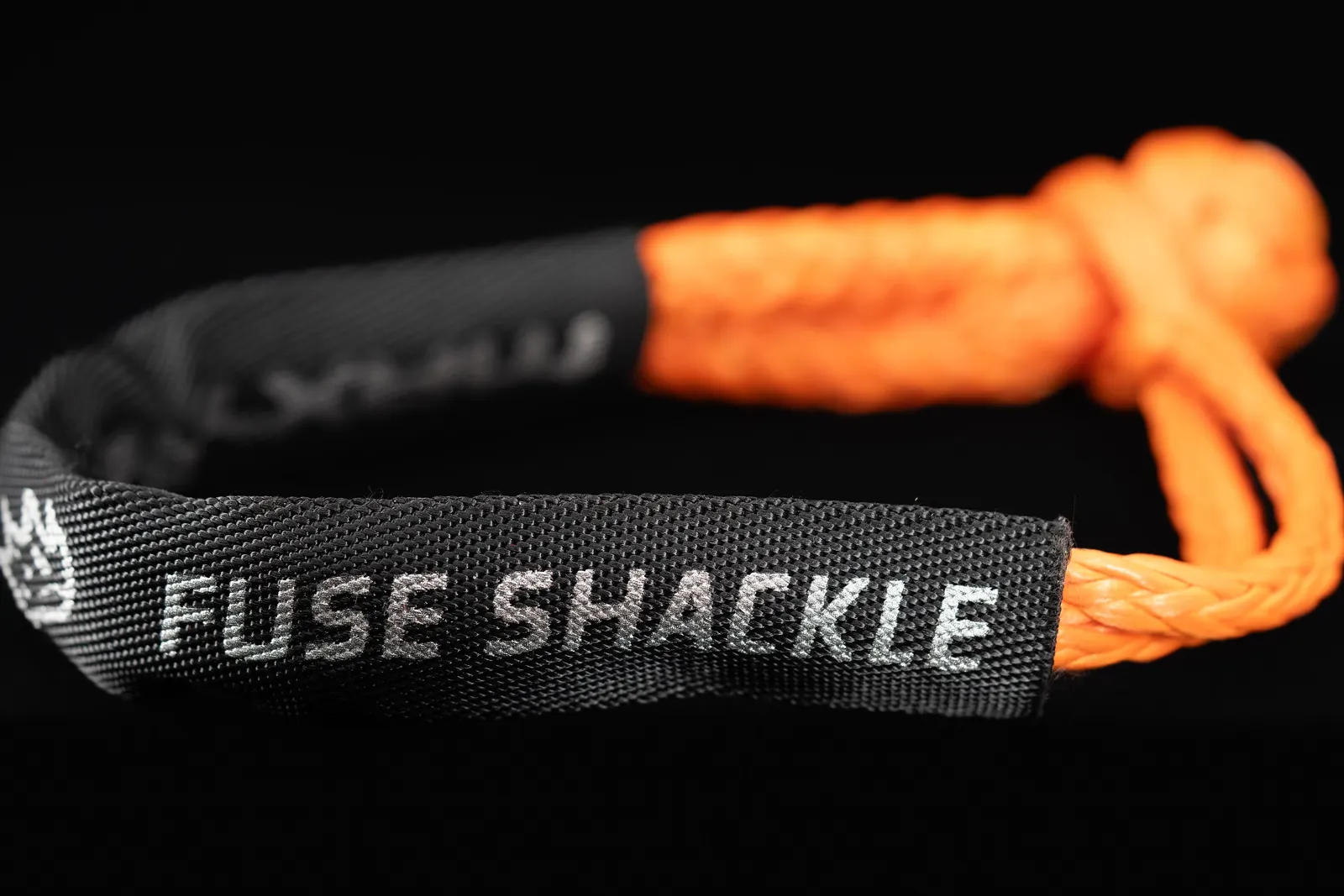
When a vehicle gets stuck on a 4x4 route, much of the danger comes from the recovery itself rather than from the sand or mud. A snatch strap or kinetic rope stores energy as it stretches, and if a shackle, tow ball or recovery point fails, that energy throws metal back towards the vehicles and the people around them. Our recovery gear comparison covers the specs of six common items. This guide covers what to do with them.
The attachment rule comes first
Queensland's Office of Fair Trading publishes some of the clearest public guidance on recovery straps, and its first warning is about where you attach them: never to a standard tow ball or a vehicle's tie-down point, because these aren't strong enough and can break off and cause injury or death. Dometic's instructions for its Front Runner soft shackle say the same about bumpers, hitch balls and sharp-edged tow points.
Use only rated recovery points. That means factory points your vehicle manual identifies for recovery, or aftermarket points rated for the job and properly fitted. Check your manual, and if you don't have rated points front and rear, have them fitted before your first trail. Several fitment centres in our directory list recovery kit among their services, including Ironman 4x4 in Midrand, CJ Fitment Centre in Upington and Tzaneen 4x4.
What to carry for a first trail
A basic kit for a graded trail is short: a tyre pressure gauge and a way to reinflate, a spade, traction boards, a snatch strap or kinetic rope matched to your vehicle, two rated shackles, a damper and gloves.
Try the low-energy options first
Before anyone reaches for a strap, try the gentle things. Let your tyres down to suit the surface, within your tyre maker's guidance. Dig out in front of the wheels. Put traction boards under the driving wheels. MAXTRAX notes that using boards as a ramp greatly reduces the load on the rest of the equipment if you do end up pulling.
The two board sets in our comparison differ mainly in weight and published rating. TRED publishes a load rating for the TRED Pro of 2,250 kg per axle, or a vehicle up to 4,500 kg; MAXTRAX doesn't publish one for the MKII. A pair weighs 6.8 kg for the MKII and 8.2 kg for the TRED Pro, so check how they'll mount on your rack.
Reading the numbers on a strap
Two figures get mixed up. Minimum breaking strength (MBS) is the load at which a new item is expected to fail. Safe working load, or working load limit, is a much lower figure for repeated use. Dometic's 10T soft shackle shows the gap: a 10 t break load and a 2.5 t safe working load.
Match the strap to the vehicle
Queensland's guidance says a recovery strap's minimum breaking strength should be at least double the gross vehicle mass (GVM) of the lighter of the two vehicles. MAXTRAX recommends two to three times the GVM. Your GVM is on the vehicle's licence papers or the plate in the door frame. MAXTRAX's range works as an upper limit too, so pick a strap matched to your vehicle rather than the strongest one on the shelf.
Read the label carefully. ARB lists its recovery strap at 8,000 kg as "max. load" without saying whether that's the breaking strength, so ask before relying on it.
Snatch strap or kinetic rope
Both stretch and then pull back, which is what turns the recovering vehicle's momentum into a pull. ARB lists 20% stretch for its webbing strap; MAXTRAX lists up to 30% for its kinetic rope. Neither is for lifting or ordinary towing.
Shackles count too
Queensland's guidance says any shackle should have a working load limit higher than the strap's minimum breaking strength. Every link in the chain matters: recovery point, shackle, strap. The weakest one is the one that fails. Soft shackles are light (Dometic's weighs 0.11 kg) but synthetic fibre can be cut by sharp edges, so both makers in our comparison say to inspect them before each use. MAXTRAX deliberately rates its Fuse Shackle at 7,000 kg, lower than its 12,000 kg rope, so that the shackle fails first if its own system is overloaded, and it says that system has been tested only with its own products.
Doing the pull
Drape a recovery damper, a heavy bag or a blanket over the strap to reduce rebound if something breaks. Get passengers out of both vehicles. Queensland's guidance puts bystanders at least 1.5 times the unstretched strap length away, and MAXTRAX adds that people should stay out of the path of the recovering vehicle. Agree on signals before you start. Take up the slack gently, and add only a little more momentum on each attempt.
After the trail
Rinse sand and mud off straps, ropes and soft shackles with fresh water and let them air-dry, as both MAXTRAX and Dometic advise. MAXTRAX notes that its rope's strength and stretch drop when it is soaked. Throw away anything cut, frayed, burnt, melted or worn, or anything that has lost its label.
Get a morning of training
Queensland Fair Trading and MAXTRAX both recommend a 4x4 course before using recovery straps. Some fitment centres run training as well as selling the kit. Adventure Direct 4x4 in Centurion runs driver training and tours alongside its fitment centre, and R&D Offroad in Brackenfell started out in recovery gear in 2003 before moving into fitment and builds.
Book the course before the trip, and practise with your own strap and shackles on your own vehicle, so the first time you rig a recovery isn't on a slope with the light going.