Off-road trailer builders in South Africa: what to compare before you buy
Body material, chassis design, layout and the after-sales network differ a lot between local builders, and the trailer's mass decides which licence you need to tow it.
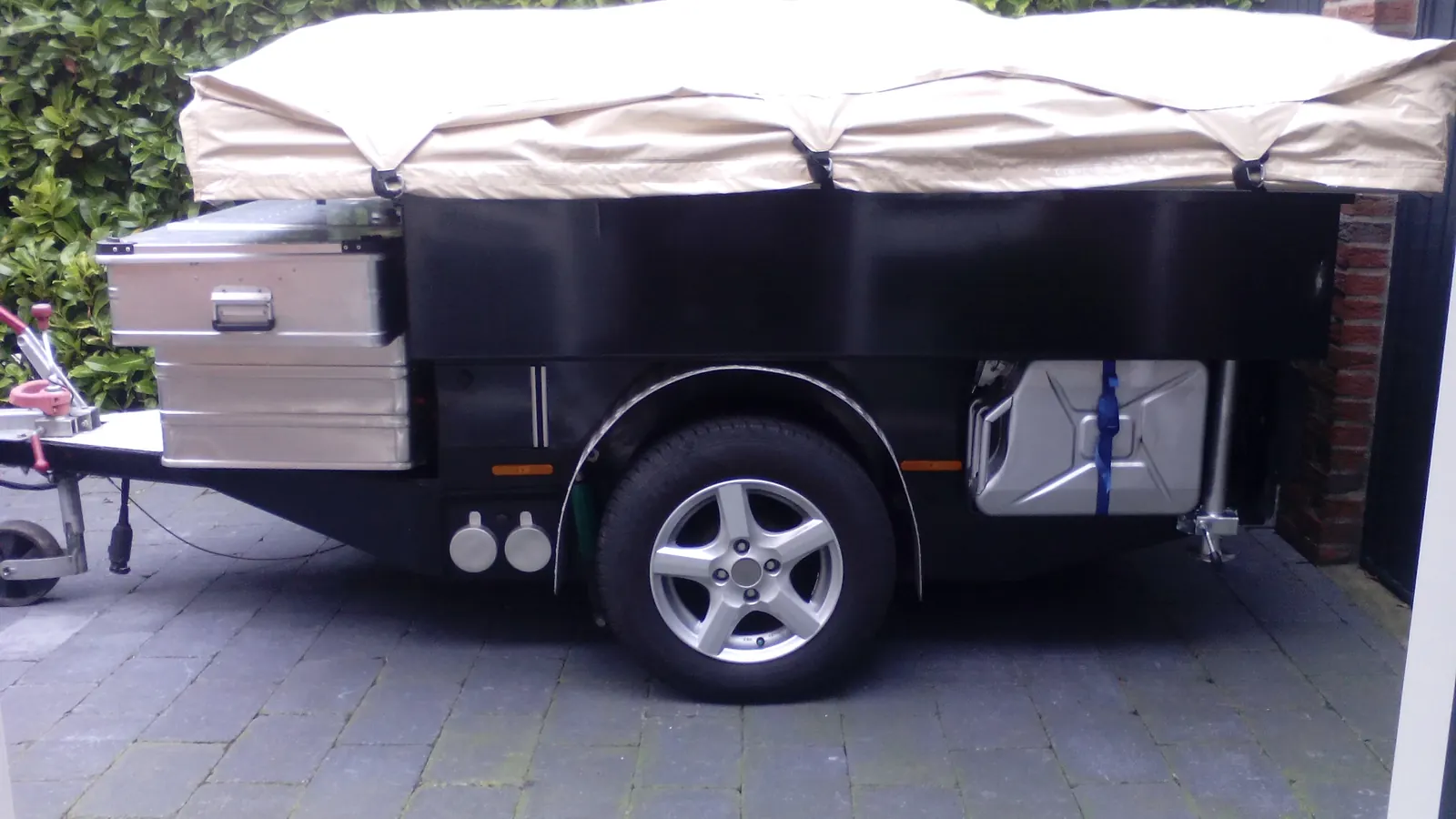
South Africa builds a lot of its own off-road trailers and caravans, and the builders in our trailer directory cover everything from compact camper trailers to full off-road caravans with a bathroom. Comparing them by brochure photos tells you very little. The useful comparison is about mass, construction, layout and who will fix the thing when a bearing goes 600 km from home.
Start with the numbers on the plate
Every trailer has two masses you need to know. The tare is what it weighs empty. The gross vehicle mass (GVM) is the most it is allowed to weigh fully loaded, as set by the builder. The difference between them is your payload: water, gas, food, bedding, recovery gear and everything else you pack.
Ask each builder for both figures for the exact model and options you're looking at, because extras such as a second water tank, a kitchen drawer or a battery box add to the tare and eat into that payload.
The GVM decides your licence code
The trailer's GVM is also what decides which driving licence you need. Under regulation 99 of the National Road Traffic Regulations, a code B licence covers a vehicle with a tare up to 3,500 kg (or a goods vehicle with a GVM up to 3,500 kg) "with or without a trailer" whose GVM does not exceed 750 kg. A trailer with a GVM above 750 kg behind that same vehicle needs a code EB licence.
Check the GVM on the trailer's licence papers or plate before you assume your code B is enough. The test in the regulation is the trailer's GVM, not what it happens to weigh on the day you tow it.
Then check what your vehicle may tow
Your tow vehicle's maker publishes a maximum braked and unbraked towing capacity, and your towbar has its own rating. Both are on the vehicle's documents or in the owner's manual. Keep the loaded trailer under the lowest of those figures, and remember that the ball (nose) weight also counts towards your vehicle's payload.
How the trailer is built
Local builders take quite different approaches to construction, and each has trade-offs in weight, repairability and corrosion.
Metalian, built in Cape Town by Authentic Metal Works since 2010, uses a monocoque body with no separate chassis. Afrispoor in Durban hand-builds its off-road caravans in 3CR12 stainless steel. Summit Off-road lists aluminium-bodied caravans (the Karenga and Kilimanjaro) alongside its low-bed Everest camper.
When you compare, ask each builder the same things. What is the chassis or body made of, and how is it protected against rust? What suspension does it use, and can you get spares for it in a small town? What size are the wheels and tyres, and do they match your tow vehicle's, so one spare can serve both? Where are the water tanks, and how are they protected from rocks?
Layout and how you'll camp
Layouts range from tent trailers you pitch on the spot to caravans you simply open up. Invader's campers tow as compact 4x4 trailers and open into caravan-style living space; its Quattro X fits into a single garage and opens into a four-sleeper. Imagine Trailvans has built off-road caravans for about 25 years, from the TrailVan to the CruiserVan and VentureVan. Mobi Lodge's Continental has a sliding bedroom and an en-suite bathroom, with the smaller Mobi XL below it.
Bigger and more comfortable usually means heavier and harder to tow on tight tracks. Think about where you'll actually go. A trailer that suits a gravel road to a farm campsite may struggle on a steep, rutted mountain track, and the reverse also applies: a stripped-down off-road trailer is a hard sell for a family on a long stay.
Garage space is worth measuring too. A trailer that fits under cover at home is easier to keep in good condition between trips.
Service and spares network
A trailer needs bearings, brakes, suspension and electrics looked after, so check what support exists near you and along the routes you drive. Conqueror, with its factory in Heidelberg, sells and services through branches in South Africa, Botswana and Namibia. Bushwakka Africa in Worcester builds trailers and campers, and its sister fitment business Kamelback 4x4 is part of the same group. Some builders also service and repair their own units, as Afrispoor and Imagine Trailvans do.
Fitment centres can help too. SafariCo 4x4 in Pietermaritzburg fits accessories to off-road trailers and is the KZN dealer for Metalian, and CJ Fitment Centre in Upington lists trailer servicing and is an approved Conqueror service and repair centre.
Custom builds and other trailers
If none of the standard models suits you, some builders will do custom work. LeBusha Trailers in Pretoria builds camping, overland and custom trailers, as well as utility and motorcycle trailers and bakkie rack systems.
A custom build needs a clear brief. Write down what the trailer must carry and how you'll use it, and ask for the expected tare and GVM in the quote. Ask, too, how the builder handles registration and roadworthy paperwork for a new build.
Before you sign
Ask to see the tare and GVM on paper for your specification. Check the GVM against your licence code and your vehicle's towing limits. Get the warranty terms, the service intervals and the nearest service point in writing. If you can, tow the trailer loaded on a short trip close to home before you set off on a long one, so any problems with the hitch, brakes or electrics show up where help is easy to find.
Browse all builders in the trailer directory, or by province: Western Cape and Gauteng have the most listings.